OCTO TAT TALKS EPISODE 1:
GRAHAM HALL
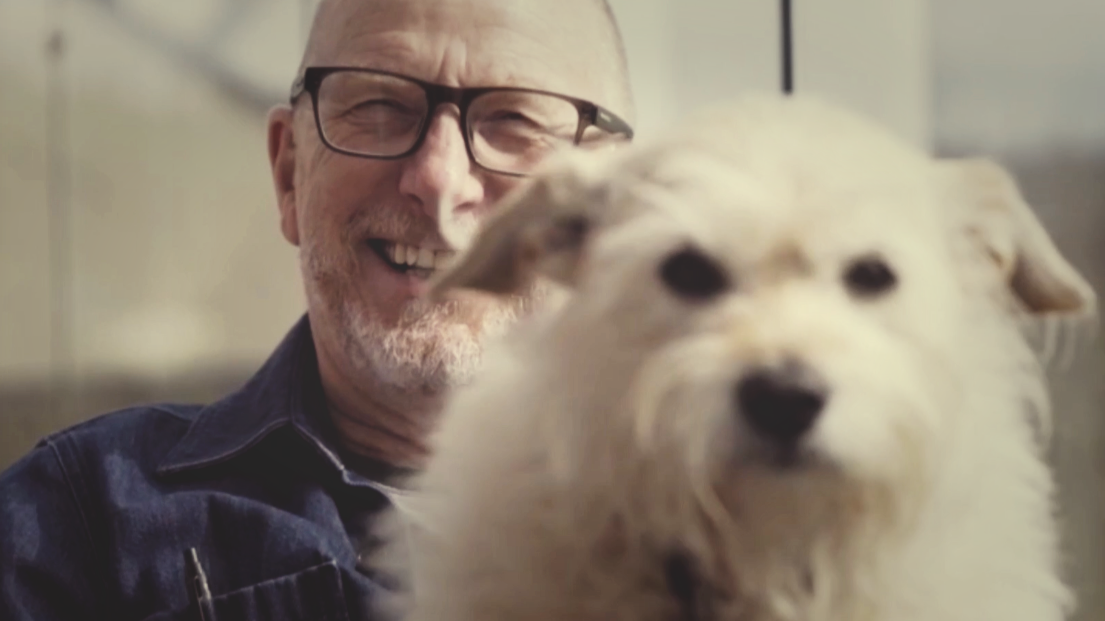
GRAHAM HALL AND HIS DOG, TIGER LILY
I’m stoked to post my first Octo Tat Talk podcast. As I’ll explain in the intro (and you’ll see within the first 3 seconds) it’s intentionally unpolished. The sound sucks. The visuals are pixilated. But I wanted to give myself permission to produce something that didn’t need to be completely buttoned up. Perfectionism often blocks progress. So I focused on the message … not the packaging.
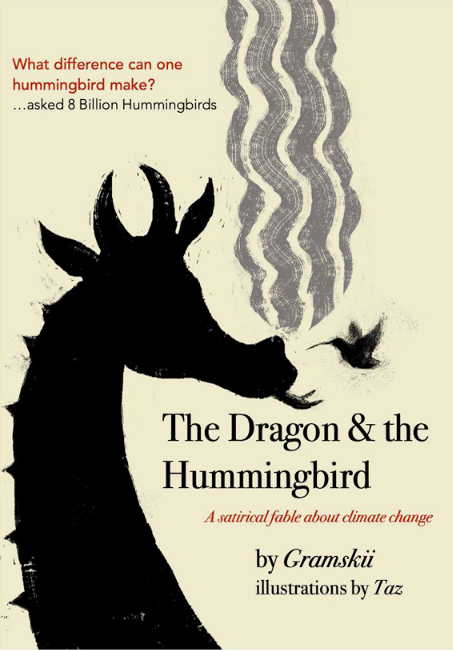
In this episode, I chat with Graham Hall, author of The Dragon & the Hummingbird - a fantastic (and free!) book about climate change. The full transcript is included below with links to timestamps throughout and some <bonus bracketed commentary from me.>
-
Watch The Tale of the Hummingbird from Dirt The Movie featuring Wangari Maathai, founder of the Green Belt Movement and a Nobel Peace Prize Laureate.
Watch What everyone gets wrong about the environment | Joshua Spodek | TEDxWaltham
Swap In Just One Meatless Meal a Week for an Easy Climate Win by Simmone Shah, published on Time.com on Apr 29, 2026 at 8:43 AM PT.
-
Try to break my habit of using “ya know” and “like” as fillers :(
Stop saying “Holy moly”, “Oh my gosh” and “whatever” so much.
Figure out how to record with better sound. Maybe next time I’ll use my old Blue Snowball mic instead of the default speakers in my PC.
Investigate open-source video hosting platforms. I don’t necessarily want these episodes to live on YouTube but I do really like the ability to create chapters and clips so easily.
THE TRANSCRIPT
00:01:50 WHERE IT ALL BEGINS
KATE KEMP: Hello. Today I am joined by Mr. Graham Hall and you are formerly the strategist of Coca-Cola, PlayStation, Nike.
You worked on one of my favorite campaigns of all time, the anti-tobacco Truth campaign with Crispin Porter & Bogusky. But why we're talking today is because you are also the author of a very favorite book of mine called The Dragon and the Hummingbird with beautiful art by … is it Taz?
GRAHAM HALL: Paul Taylor.
GRAHAM HALL: Yeah. Lots of lovely pictures. Yeah.
KATE KEMP: Gorgeous, gorgeous art. Yes. So, this book is available at HummingbirdEffect.org and it's FREE if you would like for it to be or you can get your
GRAHAM HALL: Free?!
KATE KEMP: Free?! WHAT?! Get out!
GRAHAM HALL: Get out of here!
KATE KEMP: [laughs] But it's … no catch!. No catch. The only catch is that you should read it and if you like it … umm … even if you don't like it, you should also buy a paperback copy before it gets eaten up by the internet demons who erase everything, right?! So yeah, I met you because of a post on LinkedIn before they were all written by robots. So Tom Christmann, the CMO of TiNY had posted about you and I went to your site and I downloaded the book and loved it and thought it was fantastic and we connected because I actually did donate … you can donate to Graham if you like the book and if you support the cause and that's how I met you because I left you a little note and you reached out to me on LinkedIn and here we are today after many WhatsApp exchanges and many video calls about life and climate change which is what this book is all about. So, welcome welcome to the conversation.
KATE KEMP: My very first podcast. Episode one.
GRAHAM HALL: Is this the OctoPodcast? Or …
KATE KEMP: The OctoPodcast … I haven't decided yet. We're still in R&D for the name of this.
GRAHAM HALL: Still in development, Yeah. Yeah.
KATE KEMP: We'll do some A/B testing. We'll figure it out. But …
GRAHAM HALL: Yeah. Yeah. Yeah.
00:04:10 THE STORY OF THE HUMMINGBIRD
KATE KEMP: So tell me, for those who aren't familiar with the hummingbird tale … tell me about that. What is the story of the hummingbird?
GRAHAM HALL: Well, the hummingbird is a little story told within the larger book and it's part of a story that's told by one of the characters in which she explains that there's a fire and this is an old, I think it's an African folk tale. So I've just transcribed this element of it because it … I'd actually written the book to be honest. And then a friend of mine had read the book and said, "Have you ever heard of the story about the hummingbird?" And I said, "No." And he told me and I thought, "Oh my god, I've got to put that in the book!" So that's actually a good example of how this book has evolved over time.
GRAHAM HALL: But anyway, so that little story ... There is a forest fire and all of the animals, all the tigers and lions are running away from the fire and the snakes and they're trying to get away from the flames. And meanwhile, they spot a little tiny hummingbird going in the opposite direction. And as they're running, they can see this hummingbird going to and from. It's going to the river and picking up some water in its tiny little beak and flying towards the flames and then squirting that two drops of water on the flames and it's doing this all day, this little hummingbird. and the tiger says, "Why are you doing this little hummingbird?" And the hummingbird says … the tiger is saying, "It's amazing that you're doing it, but you're not going to make any effect at all. Why don't you just give up?"
And the little hummingbird said, “Well, I'm doing what I can." And that is an encapsulation of what the book is really about. It's about all of us getting together in our own separate ways and creating a kind of … it's like a network of activity. Some of which is joined up some of it which is just an individual working at the project for themselves. And that's essentially what the book is about.
It spends a lot of time explaining how the system that we're currently living within … mostly unconsciously is having a severe effect on the climate. And I'm not necessarily having a go at the system itself, but I'm having a go at a system that is having that effect. So we have to all of us I think step back a little bit and ask some serious questions about what is our part in this process that's unfolding right in front of us and hopefully the book … I don't want to sort of go on too much here, Kate, but I do tend to ramble.
In my mind it came to me that we all of us want this to stop. Very few of us (the psychopaths amongst us may not be included) but the vast majority of us would think … would prefer things to not be the way they currently are. And we may be trying to do something about it. Or we may feel overwhelmed because there's so much stuff that seems to be needed to be done and we have so little power in the process that we don't bother. We're like that tiger that is running away.
00:07:46 WE’RE WORKING ON A 1,000-PIECE JIGSAW SET
So it came to me that it's almost as though we have this thousand-piece jigsaw set and we're all working on these little pieces and we're trying to put these little pieces together.
Some people are over there putting together the green stuff that maybe trees and then there's some people over there putting the blue stuff together that might be the sky. But none of us know because somebody's lost the box lid. And we have no idea what the finished picture looks like. And what I'm hoping this book … what I think this book … why I wrote this book and what I tried to do was just to describe the overall picture so that we can see how the various pieces fit together within the whole of the picture, if you can grab that analogy. Because when you know, when you can see the direction you're traveling and it's not confusing, you can become so much more effective and so much more engaged and so much more … feeling as though there is a purpose to what we would like to do ourselves. I think that this feeling is kind of latent within us. We want to do something. We're just not quite sure what to do. And we're given a lot of divisive counterarguments to why we should be doing it. So, it's a recipe for confusion, which is exactly what helps the system continue. So, this is my little way of writing, of doing my bit to be my hummingbird. And I'm hoping that people … if they read the book and I kind of think this is true because I get quite a lot of feedback from people saying it's made them more conscious and…more kind of considerate about what they're doing and it kind of makes these micro changes in behavior because you see how it all works together more coherently. There you go. That's what it's about.
KATE KEMP: Beautiful. Beautifully said.
GRAHAM HALL: Was it? Can I say … so one other thing, Kate, and I know you're the host and I should let you say something, but I think me and you talking is actually a microcosm of what we're talking about. The fact that you're in Seattle, I'm living in the UK now, and we didn't know each other from Adam. And it was only some wonderful miracle the algorithm fed you my book and you looked at a crappy website that I'd put together and…
KATE KEMP: [Laughs]
GRAHAM HALL: And you could maybe perceive through all of the crappiness of it that there was somebody earnest and with a genuine desire to trying to do something. And you responded to that because it kind of resonated with how you felt. So me and we I think we're good friends
KATE KEMP: Yes! Absolutely!
GRAHAM HALL: Even though we've never met and we live so much further away and the time gaps are horrible you might say. It's 7 a.m. at your place and it's 3:00 p.m. where I am.
00:10:59 WE ARE ALL ONE!
But we are in a way we're kind of one because it's great because I know what your values are and that's such a beautiful thing to kind of know that our Venn diagram really overlaps on all the important bits and together and you're putting together a podcast now. You're going to be spreading the word about all sorts of great things and I'm not necessarily the reason for that, <Actually, Graham actually is the MAIN reason I finally stopped making excuses to put something out there, but he’s a super humble human.> you would have been doing it anyway, but I've contributed a little bit to you doing that and you're contributing to me to help me do what I'm trying to do. So, THAT’S THE POWER OF THE HUMMINGBIRD! That's the hummingbird EFFECT in ACTION!
KATE KEMP: Hey, look at this. I wore this for you today! [Kate stands up to show her red T-shirt with a print of a hummingbird flying to the right of a plant by a pool of water that’s reflecting the sun]
GRAHAM HALL: HEY!! Wonderful.
KATE KEMP: [Laughs]
KATE KEMP: We're all little hummingbirds.
GRAHAM HALL: Thank you so much.
00:11:50 PEOPLE ARE PUZZLE PIECES
KATE KEMP: And I love your jigsaw analogy because that's one of my things that I say often is that I consider people to be puzzle pieces and that our purpose is to connect to the other pieces that fit. But not only that, I think people get wrapped up in, connecting to people … like … “It's me me ME! I need to connect with this piece … or even romantically like “This is the one!” like “We're meant to be soul mates!” And it's like … you can … that can happen! I'm not saying it can't, but I think more importantly, it's about seeing those pieces like being able maybe I can see part of the lid that no one else can see and I can say [GASP!] “YOU need to connect with THIS person!” or “Oh my gosh!” and that's what happened with Tom posting about you and that's how I found you was like he put that puzzle piece out there saying “Hey! Anyone looking for this part of the puzzle? I've got it over here!” And that's what drew me into it, you know?
GRAHAM HALL: That's beautiful. Yeah, it's really great. I hadn't thought about that.
KATE KEMP: Yeah. I think that … I'll add another layer to that and say that I think that there's not just one puzzle that we're putting together. So, even if you think you see the lid and you're like, I know exactly what this is, you might be in a completely different puzzle, not have anything to do with that, and it's your job to help that puzzle get put together so someone else can help you find your pieces…
GRAHAM HALL: Yeah. Yes.
KATE KEMP: And that's how we all come together because I don't think any one person can … I will take that back. I was going to say not one person can change the world. I don't believe that. I think one person can. But the way that it's changing is by putting that energy out there to inspire others to continue doing that.
KATE KEMP: Because even if I were to find all of my edges and connect and be like, I'm done. It's like … great. We're four pieces in a four million piece puzzle. So, good job me. But also you can't stop there!
GRAHAM HALL: Brilliant. I love it. That's great! There's also a little piece about this. the fact that we were talking and I've been doing quite a lot of these interviews … They're not interviews they're conversations I'm calling it's a bit of a salon so I've put out invitations for anybody on LinkedIn if they wanted to talk to me to get in touch and we can have a chat over the internet and it's so great because we don't know what we're going to talk about we're not selling anything to one another and what it made me realize was how transactional the system makes us in a way. It's all about … you do things “in order to” something there's very little … I do something without necessarily knowing what the outcome's going to be and that leaves the door open for a whole new set of solutions and options and in insights to come in that I hadn't necessarily planned for. It's a beautiful thing and it's all based on mutual respect as well…which is when you take away that profit motive, there's much more room for us to relate in a more authentic way, I suppose.
KATE KEMP: Yes! Absolutely. I think one of the things that I miss the most from pre-covid-have-to-go-to-the-office-every-day times … the “before times” is those water cooler moments. It’s those … you go in, you're pissed off because of whatever is going on in your pitch or your day or whatever and you feel like fine I'm just going to get a coffee I just need a minute. You go in there and there's somebody else who you've never seen before from the agency or in whatever field you work in standing there doing the same thing. You have your little pleasantries, your little, surface level weather talk or whatever. But then if you allow it, it can turn into an inspirational moment with someone who is outside of your ecosystem that you've created, right? And I think one of the issues and one of the reasons that people are feeling so stagnant lately is because they're sitting in their own pool. They're allowing the algorithms to feed them. And IT’S CALLED A FEED! The “Instagram FEED.”
GRAHAM HALL: Yeah. Yeah.
KATE KEMP: It's feeding you this repetitive dialogue, this one viewpoint where we might look at the same post and we'll be fed different comments because that's what the algorithm does. It wants to keep you from challenging your own viewpoint and…
00:15:00
GRAHAM HALL: Yeah.
KATE KEMP: just saying, well of course, of course this is what I believe because everybody around me believes this, but you're not looking at anybody else." and so those moments … there was a post that just got shared around on Substack the other day. It was a quote about Vonnegut saying he was going to go and buy an envelope and his wife was like, "Don't you're going to buy a single envelope? what is wrong with you?" and…
GRAHAM HALL: Yes.
GRAHAM HALL: Yeah. Yes.
KATE KEMP: order them online. You can get a hundred for half of the price or whatever. And he's like, "No, no, no, no, no, no." the thing is, and of course, he's written this way more beautifully than I'm going to paraphrase. no, it's about the act of going to get the envelope. I compliment the woman on her dog on the way. I see the guy getting a coffee. I, watch someone trip and help them. It's those extra interactions that inspire you to create. And if everything is just fed to you, then you're just going to get fat. Metaphorically.
GRAHAM HALL: And yes, and the algorithms do that.
GRAHAM HALL: But I think that the thing … especially in this day and age there's less and less what's the word discretionary money around for you to spend on things. Everything's more expensive. We have less spare cash to buy things, for example. But that also means that we have less spare time not to be doing something that's making more money because I think we're becoming more and more compressed by the economy which it has less and less breathing space for just living. it's all about making money to live.
So, I said, I think we're being compressed more and more by this system, which includes all the flipping billionaires.
And it gives us less and less free time at just think just to have free time, for example, to have these conversations. Hey ho, I don't want to get too depressing, but that's kind of like the
KATE KEMP: Well, it's a depressing topic, but that's the beauty of your book is that even though, ultimately, it's a look at climate change, it's a look at the system that we're in and what we can do about it.
KATE KEMP: It's not just a doom and gloom, “Oh my gosh, everything's falling apart!” (Which is one of the reasons I love your book.) There are actual tips and tricks in there in the dialogue to help you make an impact to make a difference. From thinking about what you're eating, and not being meat focused …
GRAHAM HALL: Oh yeah. Can I say something else about that? I think there's … Sorry if you can hear that helicopter. they're closing in.
KATE KEMP: I can’t. They're after you! They don’t want us talking about this!
GRAHAM HALL: They're closing in!
00:20:09 REFUSING TO BE PART OF THE CORPORATE MACHINE
Within this book I think there's about three or four thoughts, concepts, ideas which I believe I came up with without it being some sort of false memory syndrome or something. but the rest of it is all readily available information that most people know. There's very little of this I think that would come as a surprise to somebody that's got even a cursory interest in the subject.
KATE KEMP: Mhm.
GRAHAM HALL: But I think what the book does is lay it out so that it makes a kind of linear sense and it starts at one end and we go through learning about some stuff and then we learn how to fix it and then we learn about how to be inspired etc. None of which is and now we've got a car alarm going off. none of which is novel, but what is possibly novel is that I've laid it out in a way that's easy to understand and it's not a drag and you're bowled along by it and it's a kind of an event in a way almost. It's almost experiential. I sound terrible telling you how great my book is.
KATE KEMP: That's the whole point I'm talking to you is tell great your book is it's okay that …but that's the sign of your humility in you have written something great and like you told me the other day you're getting 50 requests on LinkedIn a day people agree that this is good content so don't be too humble. You want people to buy the book. So don't forget that part.
GRAHAM HALL: Download it! You don't have to buy it.
KATE KEMP: Yes. Yeah.
KATE KEMP: HummingbirdEffect.org. Yes.
GRAHAM HALL: Because it's actually also important, Kate, to mention that it is absolutely anti-Amazon. This is not about feeding the corporations. In a way, I want the book to be a microcosm of what the book's talking about.
It's an evidence of what we're trying to achieve, which is that individuals can read this thing and spread the word and maybe point to other books like it. Or will take your thinking further forwards and it's all done outside of that system of monetization that Bezos or Musk or whomever … Ellison … might want to get a piece of the action from us.
It's not their action! They're not having the piece of this action. Go and find their own action! Go find something more interesting to do with their lives than just sort of gathering huge amounts of money and putting them in a bank account somewhere offshore. Yeah. Sorry.
KATE KEMP: Yes. Yes. So, you will NOT find this book on Amazon. Absolutely not. You're preaching your own message there.
GRAHAM HALL: And until…sorry.
KATE KEMP: No, no!
GRAHAM HALL: Until a distributor comes out which isn't exploitative and extractive. Obviously I'd love that to happen if there was an alternative because of … it's the way it's rigged at the minute … there IS no alternatives as far as I'm aware. So we have to try and do it ourselves and…
KATE KEMP: Right.
GRAHAM HALL: and it would be a wonderful kick in the … poke in the eye if this or books like it or content like it I mean it is beginning to happen I have to say. So this is maybe one of a lot of different alternatives that we will start exploring. The whole concept of opensource software and open source and mutual aid and cooperation. It's discussed in the book. I actually do believe, Kate, that we are beginning to say, “No, this doesn't work for me. I want a different system that serves me better.” Something I call “enlightened self-interest.” (Well, I don't call it that. It's a thing.) This realization that self-interest is all about looking after number one. But enlightened self-interest is realizing that the best way to look after number one is to look after everybody else because we are all part of a kind of mutually reliant system. It's not rocket science.
00:24:43 IT’S OKAY IF YOU DON’T KNOW WHAT’S GOING ON
KATE KEMP: [laughs] Yeah, it's true. It's true. But I think another thing that I really love about your book is that while you do on the one hand want to be like, "My gosh, you guys, it's so simple! WHY CAN’T YOU SEE THIS?!" you're not doing that in the way that it's written. and it makes it safe to where I will admittedly say I'm not educated when it comes to political things. I’m not. I rely on very involved friends and I'll check in with them and be like,
"Yo, is there anything I should be paying attention to?"
And they're like, "You don't know about XYZ?"
I'm like, "No. Should I?"
“YES! OH MY GOSH!”
“Okay! Okay! I'll go pay attention!”
And so a lot of times when people are talking about political climate, I'm like, I don't understand what's really happening.
But your book will cover off on a lot of things that I was curious about, but maybe felt stupid to ask, right? Which is I know I should know this. I don't even want to admit I don't know this. I'm just gonna nod along and then look it up later or whatever. But there were a lot of things in your book that were educational and the way that they're presented is … you know, the angle is that someone who doesn't understand what's going on is being educated by someone who does and it's not in a demeaning slap-you-across-the-face like: “Oh you IDIOT! What's wrong with you?! Don't you know that, by not paying attention, you're destroying the world!” And giving that guilt to where anyone who doesn't understand feels even worse and then it's like, “Well, I'm certainly never going to ask a question again because I don't want people to know I don't know!” But I think that the trick is that most people don't know. You know you know you <OMG 3 you knows in a row? Come on, Kate> You understand the patterns and you can see what's going on, but unless you're actively discussing it, unless you're having that discourse in which maybe I believe something is a certain way until I talk to someone who doesn't and I have to defend oooor change ?! Oh my gosh, holy crap … CHANGE that position? What do you mean?! Either way, like we're not evolving. [00:25:00] we're not coming up with those solutions of change. And so I loved that I could read that book and be like, "Oh my gosh, I didn't understand that either, but I felt too stupid to ask.” But I know that there are people out there who are willing to sit with me and talk me through it.” And that's another reason I wanted to start doing this podcast is to talk to people about topics that I'm afraid to talk about because I feel stupid. Because I don't know. Because I can't be like “Well according to whatever happened in whatever year with whoever in charge like this!” I don't have those references!
GRAHAM HALL: And can I say that you're clearly a super smart person. Really smart person. And yeah, it's weird. We aren't taught this in school actually.
KATE KEMP: Right. And in corporations you're like … you can get fired for talking about it. You don't talk about politics.
GRAHAM HALL: No. Yeah. Yeah.
KATE KEMP: You don't talk about religion. And you certainly don't talk about how much you're making. Well, if we look at this one that I know a lot about: how much you're making. I'm very good negotiator. I've always negotiated solid salaries. I know how to do that.
And the reason I KNOW how to do that is because I'm not afraid to ask questions about it. And what I learned when I ask questions about it? Holy moly, is it a corrupt messed up thing as a woman creative leader to be friends with people like you and say like “Ahh … I asked for like… 100k is that like …? I feel like ‘Oh my gosh like is that like…?” And then I'll talk to somebody like you you'll be like “Oh my gosh! You should be asking for DOUBLE that! What are you TALKING about?!!” Like “What are YOU talking about?! What are YOU making?!” and then you hear that number? You’ll fall out your chair.
But I never would have heard those numbers if I wasn't confident enough to ask the question and…
GRAHAM HALL: Yeah. Yeah.
KATE KEMP: and by asking those question then having this conversation then “I'm only making X. And then the other person's like “Are you serious?!” So the only way that you discover things that are messed up is by asking the questions about them and conversing with people who have different experiences than you.
GRAHAM HALL: But that takes courage as well… because by asking that question … they don't want you to ask those questions.
KATE KEMP: Yes! That's why you get fired for asking it and that's why you have to go underground and you have a cocktail with somebody and you're like “Okay okay, this is totally off the record. Please tell anybody I said this BUT…”
GRAHAM HALL: Yes. Yes.
KATE KEMP: And then you learn the truth and you're like [GASP] “No wonder they don't want us to talk about this! Holy moly!”
00:29:40 THE CLIMATE CHANGE BELL CURVE
GRAHAM HALL: You mentioned that. So, I'm really touched that you said what you said about you didn't know this stuff because you're a smart person and the fact that I wrote it, right at the beginning there's this kind of bell curve thing which is saying that you got all these kind of what's it called? Greta Thunbergs at one end who are very radicalized … not radicalized in a bad way. They are very engaged. And then at the other thin end of this bell curve there's all the kind of the billionaires who are trying to not change the status quo.
So you got people at the other end trying to retain the status Then you’ve got this huge dome in the middle, people like me and you where we don't know which one's the right way to go.
KATE KEMP: Right. Mhm.
GRAHAM HALL: And we're not given the information and all it will need in my view is a little shove for that bell curve to be pushed towards the more radical end, the more change end for the whole thing to change. But when we're just sat in the middle not sure which way to go, it just perpetuates the status quo and we're running out of time quite frankly. So we're going to have to try and shift that bell curve. [0:29:14] There was something else I wanted to mention and it's gone. You'll have to cut this bit out of this. it's just no.
<I did NOT edit this part out. Sorry, Graham. LOL. It helped support my next point.>
KATE KEMP: Absolutely. We'll do some editing. I'm also disappointed. For some reason, we're getting pixelated. It makes me sad. But I'll use this moment to say that with this podcast one of the reasons I didn't do it for so long is because I felt like it had to be perfect. I felt like I need the right equipment. I need the highest internet speed. Whatever. I have to have the intro song and I've got to have the animatic and then will I have to do site and…well I have to do this and I have to do that. It's like … “No I don’t! I need to have a conversation.” So, it's pixelated, but like … So what? The message is what's important, not how the message looks. <Also, just a note that when you have Google Meet record your meetings, it records it in a high quality, even if your own visuals look like crap. My live visuals looked way worse than the final video file provided.>
GRAHAM HALL: Yeah. Yeah. Maybe you should say that somewhere, you know …
KATE KEMP: Yeah!
GRAHAM HALL: own up to it because, we're not all trying to be perfect. Being perfect is part of the problems, by the way. That's part of another one of the fucking … another one of the rules that we are constrained by.
KATE KEMP: Yeah. Yeah. <Gross. I now wipe my nose with a tissue on camera. Definitely not polished, but I’m leaving it in anyway b/c who cares?!>
00:32:00 OPEN YOUR MIND
GRAHAM HALL: What was I was going to say? Oh! That was maybe one thing I wanted to say was I'm not trying to give you any answers either. I'm just trying to open the mind to explore answers for oneself.
I don't think the book is trying to be prescriptive about what you should do. You should just know the facts rather than I'm not telling you what to think.
KATE KEMP: Right. You're telling … that's the difference. You’re not telling us WHAT to think. You're telling us TO think. Very, very different direction.
GRAHAM HALL: Right. I think … because I don't know the answers either. I do know that we just all need to be more aware. I do have a faith in humans. I do believe that they are inherently good and that they inherently want to help one another.
Although the system has kind of tried to make us believe that's not the case. I genuinely believe it is the case.
KATE KEMP: Yes. Yeah.
GRAHAM HALL: And really to just what's I guess … rebalance that argument, I think. Just put up a coherent argument in defense of people and why we should look after one another and the beautiful planet we live on. It's ridiculous that the situation we're in when we have this embarrassment of riches are all around us and … we're just trapping it out. It's ridiculous.
00:33:24 “THE CYCLE OF WANT” TRAP
KATE KEMP: It's like we're living in this world in which we can literally have anything we want. ANYTHING WE WANT. And yet, we've trapped ourselves in this cycle of want, right? Where it's just like … it's never enough. We consistently want more. I think it's what's interesting to me is, when you think about the little changes you can make, one of the changes that I made was I stopped ordering delivery stuff, groceries, regular subscription things. I have one toilet paper subscription to Plant Paper. I guess it's the only place I can get it. <I also have a subscription to Huel and one for Ritual (which you don’t need to be pregnant to benefit from).>
GRAHAM HALL: Okay. Yeah.
KATE KEMP: But I stopped doing that because I realized that addiction to having boxes on my doorstep every day, became a thing. And then I wanted more. It's like, I'm opening a present. I get a present for me every day! And it's like, I need this thing. I also need this. And I'd look around the house and be like, “I should totally get a new … whatever … oven mit” or “I should get a new …” whatever ... Just things you don't need. Things you do not need them, but you've convinced yourself and you're addicted to … boxes of smiles coming on your doorstep every day and it just like perpetuates that want cycle. And when I stopped doing that, I realized there were a couple things that I missed where it's like “Aw man…” like for a while I didn't have a rug under this chair. So I would be on conference calls and it would be like one of these where I just keep rolling back because I have an angle in my apartment. So that things like that were annoying, but at the same time it just showed me I didn't NEED any of those things, right? But you don't know that just until you break out of that cycle…until you crush out that last cigarette and realize whatever. You know what I mean? it's been a interesting thing.
GRAHAM HALL: It's very like up an addiction … I think.
KATE KEMP: Yeah, it is. And it hurts and it sucks. And do I like taking the bus to the grocery store and only being able to carry bags that I can carry? Not particularly. But what I do love is the experiences I have on the way, the people I talk to at the bus stop.
GRAHAM HALL: Yeah. Yeah.
KATE KEMP: Whatever … who's rapping on the bus and they're really good. I wouldn't have heard that or whatever it is. you don't — all of those experiences you just close yourself off to when you just have it come straight to you and you stay in your little prison box, you're imprisoning yourself, but you don't have to do that.
00:35:58 most people are inherently nice
GRAHAM HALL: Yeah. We also spend an awful lot of time projecting what other people think of us.
KATE KEMP: Mhm.
GRAHAM HALL: And again that’s … I always used to be in advertising that's basically what I was doing. I was make making people imagine what other people thought about them if they didn't have my product which is fucking awful. Disgusting when you think about that because actually most people think other people are nice and…
KATE KEMP: Yep.
GRAHAM HALL: and the people who the nicest are the ones who don't give a fuck about that. The ones who are free and they're not showing up and they don't have the latest thing because they're happy in themselves. That's the most attractive feature of anybody I think. It radiates out of somebody who's just, you know, comfortable with themselves and confident and then don’t need props to justify who they are.
KATE KEMP: Yeah.
GRAHAM HALL: So yeah, kind of it gets kind of Buddhist and quite kind of non-materialistic and all of that stuff when you really get into it.
KATE KEMP: Yeah.
GRAHAM HALL: Those guys knew a thing or two about life and what really makes you happy.
0:37:17 Graham's book-writing process
KATE KEMP: Absolutely. Absolutely. So tell me about the act of writing this book. At what point did you like were you taking a bunch of notes and then all of a sudden were like, "Oh my gosh, I have a book." Or did you sit down and write it? Tell me about that.
GRAHAM HALL: It was COVID so I kind of always thought I want to write a book forever but obviously you're working and working and working. You never have any time.
And then COVID came along and it was obvious like me and a million gazillion other people thought now's the time to write a book. So I did. I sat in a box room. My father was getting old and he lived in a house and he needed some company. My niece was there looking after him. And I kind of just turned up to look to be company more to my niece who was looking after my dad. And that meant I had plenty of time in this kind of a box bedroom. And I wanted to write about, Trump had been in, Trump was kind of … it was 2020, I guess, so I don't know how long he had been in, but there was an awful lot of time talk about trust would there's no trust in our institutions anymore, and there was certainly no trust in advertising. And I thought I could write a book about trust because it's something I've been interested in for a long long time. And how to get trust back into advertising which now sounds ridiculous to me but
KATE KEMP: [Laughs]
GRAHAM HALL: Back then I thought there was some sort of way of making it happen you know, because I suppose on some level which is too complicated to get into now we still need to buy things and we'd rather buy them from people we have shared values with than people who are just trying to rip us off or sell us things for as much money as they possibly can. So there is still an element of trust within all of that. so I wrote three quarters of a book and this box room was covered in box those little cashier cards, different themes all layered. It was quite something. It was like that guy in Se7en that went completely loony.
I was like that and I got three quarters of the way through this book and the more I got into it, the more and more it became obvious that actually in so many ways you can't have trust in advertising because if I'm trying to persuade you to buy something, the only reason I'm engaging with you is because you have money which I could extract from you in order for you to have this thing. There was basically what I'm saying is there was always an ulterior motive sitting behind the real reason why we were having a relationship and no matter how I tried to pretend you get to this kind of litmus test: “If you didn't have any money would I be talking to you?” and the answer was no. So why that kind of shows up it was a contrived situation in order for me to win your faith your trust and at that point this is after months and months and months of work and a lot of a book. At that point, I just don't believe it anymore. I've got to stop. So, I stopped. My wife wasn't very happy because I'd invested so much time in it. and then I went back to work. I had to make some more money. COVID was over and then maybe a year later, I thought I've got to come back and do something with this. So I took the bones out of that work. Particularly the stuff where I was really asking questions about the nature of capitalism obviously and how capitalism and trust do not mix at all. It's oil and water. Capitalism and trust don't exist in the same space. It can't. They have totally different and opposite functions and objectives.
So I just ditched all the cap— the trust stuff and looked at what the nature of this beast was and obviously around climate change and how we are being hoodwinked into trying to ignore climate change because of the need to pursue profit. Gradually this book emerged and initially I wrote the allegory at the beginning and then I turned that into this then quite a long dialogue. It might have even been a play where characters are talking to each other which explained what the allegory was like so it was a very long and circuitous route to getting to where I eventually got to.
And then of course you get to the end and you've never written a book before and you're eaten away by imposter syndrome because I left school at … I think I was just turned 17. I'm not like some high-flying academic. I know that I'm not stupid. I've done quite a lot of things in life and some people have valued what I can do. So I know I'm not underselling myself. But when it comes to sort of more academic stuff, you never quite know whether you're up to it or not, especially around economics. And I'm not an economist or politics. But then I wrote it and people started reading it.
I think maybe you were one of the first ones to really get a hold of it and give me some sort of affirmation that it was actually really … There was something valuable in it. I mean most gratifying to me is the things that you've said about it were my intention as when I set out. So that to me almost makes me want to cry because it kind of worked. It was an idea and it seems to have worked and just the satisfaction is not the right word, possibly more relief actually that I invested so much time in it and…and I kind of pulled it off on some level. Maybe there's a better book in there, but this book's okay.
KATE KEMP: I love this book. That's awesome. So you have this crime scene of cards up. You're writing the book.
GRAHAM HALL: Yes.
KATE KEMP: At what point were you able to tell yourself, "It's done. It's ready."
GRAHAM HALL: Oh, I havent! It's still unfinished. I mean you read an early iteration and it's evolved a little bit but more than that. So there's a bit at the beginning which is kind of like a hook to get people in. It's the bait and switch. There's a kind of supposed to be this kind of quite accessible piece at the front which then gently leads you into a situation where we can have a quite in-depth conversation.
00:44:35 Engaging the Unengaged
So that I think … if this thing has any merit, it’s that it's talking to an unengaged audience. It's talking to an audience that isn't necessarily on board yet. And that's its whole purpose. There are better books than mine about what to do about it with cleverer people, but maybe the whole load of people will never read those books because they're just over your head and they're also a bit frightening. So this is kind of just the kind of CliffsNotes for getting into it and that's its objective. I think that's kind of what has worked.
00:45:15 THE NEVERENDING STORY, THE AMISH AND JOSHUA SPODEK
Anyway, what point did I when is it finished? It's not really finished because I found two amazing things in the last week which I think should be in the book.
I post on LinkedIn quite a lot of stuff that's critical of capitalism and I'm always getting push back from some investment banker or other sort of making out I'm an idiot. But I'm not an idiot because I've done the work and I say, “If you read my book, you'll realize that's not what I'm saying,” for example. But one of the things that they will always say is show me an example of communism or socialism that's worked give me one example and apart from the fact that there are quite a few examples in the book about that, it occurred to me the other day I was literally lying in bed and suddenly I thought “Oh, that's an interesting thought! I wonder if the Amish are kind of communists because they've been around for 500 years nearly and they're coherent and they've not crumbled into some horrible capitalist hypocritical mess.
They are still pursuing their belief system which mostly involves looking after one another. I'm not talking about their religious beliefs. I'm talking about how they organize their economy. Then there's the whole other group which called the Hutterites who are even more there is they don't own any property. They share absolutely everything. you don't necessarily become one of these sects. They may not be great about women's equality and a whole bunch of stuff, but what they do do and what they have made work and what and actually they're quite successful communities and they're operating inside the United States, the most capitalist entity that's ever existed. And they've successfully managed to remain coherent and true to their beliefs. And have an economic system that works based on communal living.
So next time somebody says to me, "Yeah, but what about show me an example?" Well there's a fucking example right there! Probably about five miles down the road from where you live. It works. These people look after one another. So that was one good thing I learned. And I want to put that in my book.
And what was the other one? It was this guy called Joshua Spodek. It was astonishing. I mean, basically he's been living what The Dragon and the Hummingbird is talking about and he's a TED talk guy and he's really well respected. so I'm gonna have to try and reach out to Joshua Spodek because unknowingly I kind of in my own little uneducated way put together those pieces that he with his much bigger brain has put together in a very coherent way in a fashion that he's actually living through and living by is a living example of what the hummingbird is about. So basically he is the I don't say alpha male but he's the silverback of hummingbirds.
KATE KEMP: Yeah. Yeah. Yeah.
GRAHAM HALL: So I'd quite like to mention that for example. So, it's never quite ended this book, but yeah.
00:48:46 The current PDF isn't the original
KATE KEMP: That’s beautiful. That's funny that you brought up the iterations because I had re-read the book when we had reconnected and as I was doing it, I was like, I swear that the beginning was different. I swear that it was more of like a children's story with more illustrations of the dragon and … it was just a little bit of a different approach versus what I'm seeing now. And then come to find out, you had changed the intro completely based off of feedback you'd gotten.
GRAHAM HALL: That took a lot of time for me to come to that conclusion and I'm not even sure now that it's the best conclusion. I would love to hear feedback as somebody who's read both routes. It's a never- ending work in progress but that doesn't mean it isn't coherent as it is at any time. It's just that—
KATE KEMP: I think even in creating different versions of your own story, you've provided another opportunity for discussion to where I've read both. So I can say to somebody who's only read the latter who's like “I don't know how I feel about this approach where it's talking about … whatever … more of the corporate angle versus the higher-level thing…because the version that I initially read like that that is something that is more children's story friendly so I could read that portion to my 12-year-old … well, he’s old enough to understand I'll say to a seven-year-old who might not know anything about anything and still have these conversations. Whereas the later iteration like that's more for adult version, so maybe you end up with a children's version of the dragon and the hummingbird that pushes it a little further than the initial allegory and then you have the adult version between those two versions you have out there.
GRAHAM HALL: Yes. Yeah.
KATE KEMP: But either way, it's a discussion point, that's the key. And so by having these different iterations, maybe you don't even say you've changed it. It's just out there "Yeah, I read this." And it's like that Black Mirror episode where the system changes and somebody sees this version of a hat and somebody sees that version of the hat and then they argue about what it was, but they're arguing, but they're having the conversation. And that's the key.
00:51:54 Things don't have to be perfect, they just have to BE
GRAHAM HALL: And also I think I mean I'm post-rationalizing here…but you were saying earlier on you didn't start this podcast until you felt it was absolutely finished and then nothing gets finished. Nothing never happens if you're so concerned about getting it absolutely right. And maybe we should be just a bit more relaxed about all that stuff anyway. Yeah.
KATE KEMP: Right. I think Yeah, absolutely! And that's why I'm doing it where I'm just going to do it. I don't have any plan. I don't even know where I'm going to post this. I have no idea. I'll figure it out. But I think that a lot of times when we commit to wanting to make a difference or when we accept that we're conduits for whatever it is the universe needs to communicate through our particular mouths. That's when beautiful things happen. That's when, like, if I were to put this out and…
GRAHAM HALL: Yeah
KATE KEMP: then somebody sees it and is like, "Oh my gosh, let me just do an intro for you." Then I'm not paying for it. Then it's somebody else who believes in the message that wants to support. That's another puzzle piece. It's like let's connect. I can help you here. I can help you here. So rather than trying to do everything ourselves and make sure like … I am a perfectionist. I'm a completionist. It wrecks me to be doing this without having a full plan. But at the same time I've had too many examples of just going for it and having beautiful things happen to not just do it, just get it out. Just have the conversation because otherwise it's just like these that was the thing that was wrecking me is like, “Man, I'm having all these amazing conversations with people that I feel like other people should hear. And I feel like other people should know that you can have amazing conversations like this just by reaching out and saying ‘Hi.’
GRAHAM HALL: Yes. It's crazy isn't it? That's crazy.
KATE KEMP: That's it. That's all it was. And now we're really good friends.
GRAHAM HALL: Yeah. Yeah.
KATE KEMP: But if I been like "Oh, he's gonna be too cool. He's not going to reach out to me.” like, “He’s too busy. He won't want to talk to me. I don't know anything." Then I wouldn't be here. And that sucks. So…
GRAHAM HALL: I know Woody Allen isn't someone one doesn't quote much these days, but he did say “life is just 90% showing up.” Unless you show up nothing happens. You just got to show up and do something
KATE KEMP: Yeah. Yeah.
GRAHAM HALL: instead of just talking about it and…
KATE KEMP: Exactly. And you'll inspire somebody with this.
KATE KEMP: I hope so. And I think too, a lot of people will say, let's say that other people have messages inside of them like you were called to write this book. You're like, I've got to do this. You're putting things up on the wall. You're making it happen. And everybody has, I believe, those opportunities whether they choose to embrace them or they choose to go like this [puts her fingers in her ears], that's your choice. You are autonomous. You can make that choice. However, I was thinking about this the other day. I'm like, okay. when people say they don't have time, we were talking about, we didn't have time until COVID … We had PLENTY of time. We just chose not to take advantage of it.
GRAHAM HALL: Yeah.
00:54:30 People sTREAM CONTENT 20 hours weekLY
KATE KEMP: So, I dug into some stats and I found this article on Forbes.com that was talking about streaming and the number that blew me away. How many hours a week do you think that the average American spends streaming content?
Granted, this incorporates music as well. So, it's not just sitting in front of a television, like you might be running and streaming music.
GRAHAM HALL: Yeah.
KATE KEMP: So, it's listening to music, watching movies, shows, and video games. How many hours a week do you think the average American spends?
GRAHAM HALL: I absolutely have no idea, but it'd be a frightening amount. Don't know. What is the answer?
KATE KEMP: Twenty. Twenty hours a week. Think about this. So then I was curious. I'm like, okay, so for those who say, “I want to write a book, but I don't have time." I was like, "Okay, let's do some math here." So I looked into it.
00:55:13 Math with Kate!
The average person types 40 words a minute. Okay, so if we look at your book, your book is 316 pages long. Okay, an average of so each page 350 words a page. Now … for each page … 350 words At 40 words a minute, it would take eight minutes if you were freewriting. Now granted, there's thinking about it.
GRAHAM HALL: Yeah. Yeah.
KATE KEMP: but let's not think about that. Just content itself, just getting words on a page. If you were to freewrite for eight minutes, you would write one of your pages, right? So, in order to write that full book, you do the math. It's like, 8 minutes x 316 pages, that's 2,528 minutes. So, at 60 minutes an hour, it's 42 hours total.
GRAHAM HALL: Wow.
KATE KEMP: So, you could write a 316 page, 350 word per page book if you're at your average typing speed in 42 hours. In one work week.
GRAHAM HALL: Yeah.
And if you're spending 20 hours a week consuming content, for two weeks you're like, I'm not going to stream anything, every time that I would normally be watching a show, listening to music, whatever, I'm going to go and I'm just going to write. At the end of that time, you would have 316 pages of content. Now it might not be cohesive. It might not be the best most like beautiful novel in the world, BUT you'd have 316 pages of content which like you said, once you have it around you and you're looking at it, you're like, “Wait, this goes over here and now I'm thinking about…” You know, if you can just get out of your own way and let those things flow through you, like we've got plenty of time, and even if you normally get up at 7 o'clock, get up at 6:30 and after you go to the restroom, just write for 30 minutes or do the thing, practice your piano, do whatever it is, like go learn to code, go research about engineering, whatever the thing is. if you just like in the same way that they say just eat one plant-based meal a week and it changes the world, it's like one meatless meal a week can reduce your annual carbon footprint by as much as not driving your car for a month. That’s from TIME.
Those little shifts toward doing what you want to do it's not hard. We think it's hard because we keep saying it is. STOP SAYING IT’S HARD! Just do the thing, right? do the podcast. Do the thing.
GRAHAM HALL: I listen to a guy called Jim Rohn.
I think he's a motivational speaker and I was watching it I was consuming content on YouTube in the middle of the night I think and he was saying you could change everything in six months.
KATE KEMP: Mhm.
GRAHAM HALL: If you read 10 pages of a book a day, you would have read about 16 books over a six-month period. If you got up an hour earlier, exactly as you say, three extra days! You've got a three extra days a month or something.
KATE KEMP: Yeah, it's crazy. We just think about it and we keep telling ourselves "Well I wish I could.” You can.
GRAHAM HALL: You can.
KATE KEMP: Wish granted. You're welcome.
GRAHAM HALL: My wife does yoga and I really should do that because it's been great for her. But apart from the fact that she's strong like ox now.
KATE KEMP: Yeah.
GRAHAM HALL: It calms her down. It gives her everything in the mornings. And I'm like a big fat slob. Get up and I do go for a walk which is very good for me. That's changed my life.
KATE KEMP: Yeah.
00:59:16 IT’S OKAY TO BE “KIND OF VEGAN”
GRAHAM HALL: But yeah there's and…yeah just the food I eat that sort of stuff there's so much I can do to change. I mean it's great it is great that I'm kind of vegan now. I won't make people do things if they've made food with dairy product in them. I won't demand a non-dairy product. But I don't eat any kind of meat and I don't miss it and I don't think about it at all. But if you think about, in terms of the hummingbird, I guess I have saved shitloads of animals personally. That's a nice thought and I wish everybody would do that. Yes.
KATE KEMP: Yeah, I think even I was vegan for a little over a year and… then I wasn't balancing my diet appropriately. I got incredibly skinny and ill. You can get in danger zones if you don't do it appropriately.
GRAHAM HALL: Yeah. Wow.
KATE KEMP: But I think when I came out of that and I started allowing myself to eat meat again like it's still a definite shift because I'm not eating meat with every meal, and I try not to do dairy at all. I'm an oatmilk person now. So it's like even you don't have to go completely extreme and go all the way and make yourself sick and…
GRAHAM HALL: Yeah. Yeah.
KATE KEMP: and then there's arguments too about how the vegan lifestyle like the plants that you're supplementing your diet with that's taking over acreage that the animals should live in. So you're killing the animals It's like you can't win but you can balance. And so I try not to do dairy. But it's every so often I'll have a pizza or it's like I'll balance it out. It doesn't have to be all or nothing. we can bob and weave.
GRAHAM HALL: You can be more conscious, can't you? You're just conscious of what you're doing.
01:00:56 Every purchase is a vote
GRAHAM HALL: One of the kind little things I've started to say is that buying things is like every time you buy something, it's a vote. So vote wisely. Everything you do is a kind of … certainly everything you buy is a vote. You're voting every time you buy. You're promoting something that you want. So if we're just more conscious of what we're voting for, that ultimately is actually … there's a shift that's suggested in here is if we change our behavior, we can change the system. Because the system is only reflecting our behavior. And in the very heart of that book is this kind of realization that it's not them out there doing it to us. It's us.
01:02:00 Stop placing blame and make a difference
We have to take responsibility for what we are doing for ourselves because that thing out there is only the amalgamation of all of us as individuals. It's a lot easier to blame the billionaires and the conspiracy theories. Actually, it's all of our responsibilities. And if we changed as individuals, the system would change to reflect the nature of the individual. That's really what is at the core of the book. I think I'm trying to Yeah.
KATE KEMP: That's Beautiful.
KATE KEMP: And I totally agree. I think that people spend a lot of time attacking the other side, whatever side that is.
GRAHAM HALL: Yeah. Yeah.
KATE KEMP: And I think about how as marketers, we know how to change people's minds, right? And we know the way NOT to do that is by saying “If you don't do this you're dumb! You're such an idiot if you don't like this.” You'll lose that customer!
You're not going to win them that way. It's by enticing them into “If you choose this, you will have X or you will be X or people will think X about you. Right?
GRAHAM HALL: Yeah. Yeah.
KATE KEMP: So if you're trying to sway someone to the other side, it's not about attacking them and telling them how stupid they are. It's about expressing what should change their mind and have them see things differently. And on top of that, if we are all one consciousness, if we want to get hippie about this, right?
GRAHAM HALL: We’re all one and the same. Yep.
KATE KEMP: We're all connected. We're all one. Well, if you attack or you destroy this other side, you're destroying and attacking yourself. You're getting no further ahead. You're losing things. Wouldn't you rather have the ability to convince someone who is completely opposite from you in every way to change their mind and see things in your way and then become a champion for that and help you convince others who formerly thought what they thought? And say “Man, I thought this before but now I see it x y and z way and I never saw that before and then suddenly what you couldn't communicate to these people now you've got a helper to communicate out that's how you spread the message you can't just kill everybody off that doesn't seem the same thing or
GRAHAM HALL: Yes. Yeah.
KATE KEMP: you're going to be standing there by yourself and have nothing. So yeah I love that you're voting for things as you buy and that's what you're surrounded with. I love that.
GRAHAM HALL: Yeah, you can't force people to believe something. You've got to create an environment in which they're receptive to listening unless there's any listening. There is no moving forward. It's just polarizing stratification people digging in rather than exchanging. So we have to create the environment in which listening can take place.
So that's how we move forwards, how we evolve. I think humans can evolve.
KATE KEMP: Yeah. Absolutely.
GRAHAM HALL: I'm literally talking about literally evolving and changing the way our neural network operates. and again, I don't want to get too conspiratorial about that, but we've been conditioned to see things in a very very narrow way. It's not like somebody's really set out to make that happen. It's kind of happened naturally, but we live in a really narrowly defined concept of how the universe works. And you've just mentioned
KATE KEMP: …
KATE KEMP: Oh no. You froze.
GRAHAM HALL: Consider it in any serious way, it may well happen. Quantum physics …
01:05:00
KATE KEMP: Oh, no! I'm losing you. Can you hear me? Dude, you're like talking about quantum physics and you're cutting out.
GRAHAM HALL: can the kind of hippies. It's great.
KATE KEMP: Okay, I lost you for the quantum … oh, shoot. You're glitching out.
GRAHAM HALL: Yeah. I think we've covered enough anyway.
KATE KEMP: Can you hear me?
GRAHAM HALL: Can you hear me now? You’re gonna be like "Wow, there's so much stuff for you to deal with there.”
KATE KEMP: No, it's beautiful. I think this has been a great conversation. I've really enjoyed speaking with you as I always get a lot out of our conversations so we'll do one more shout out to say you can get your book at HummingbirdEffect.org. Free PDF. In the UK you can get the color paperback for 10 pounds. In the US you can get the black and white version for $17. And people can connect with you on LinkedIn, set up time, have their own conversations with you, and they should because we are all little puzzle pieces that need to connect with each other. And that's the first way to do that. Alright. Well, thank you so much. It's so great to talk to you and we'll be in touch.
GRAHAM HALL: Brilliant. Thank you. Cheers.
KATE KEMP: Okay. Talk to you soon. Bye!