OCTO TAT TALKS EPISODE 2:
Troy lavinia
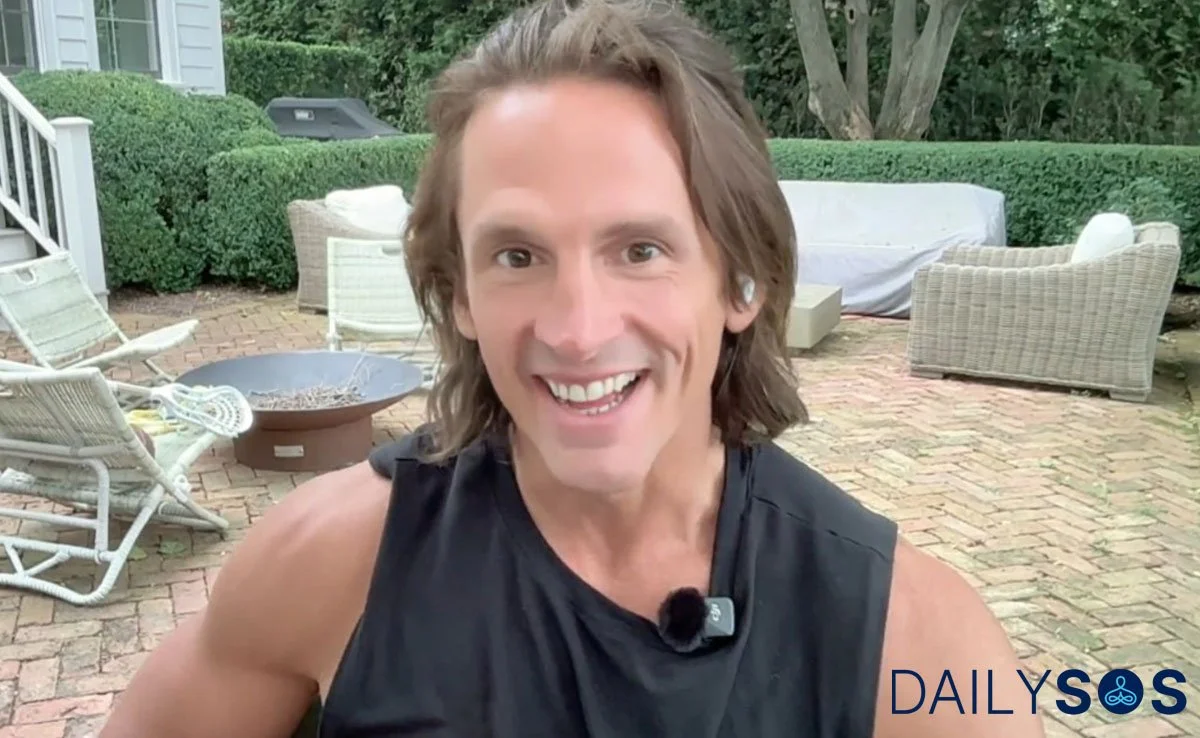
TROY LAVINIA, FOUNDER AND CEO OF DAILYSOS AND AUTHOR OF THE SPIRITUAL OPERATING SYSTEM
It’s time for episode two! This one is with Troy Lavinia, Founder and CEO of DailySOS - an organization focused on helping people get spiritually fit.
I’m still finding my footing in this world of video content creation, but, just as I did in Episode One with Graham Hall, I’m still committed to publishing the results without going nuts trying to make sure every second feels completely polished. I’m trying to break my addiction to perfectionism so that I can surrender and go with the flow (the value of which Troy discusses in depth in this episode.)
You can download the audio version below, watch the video or read the transcript.
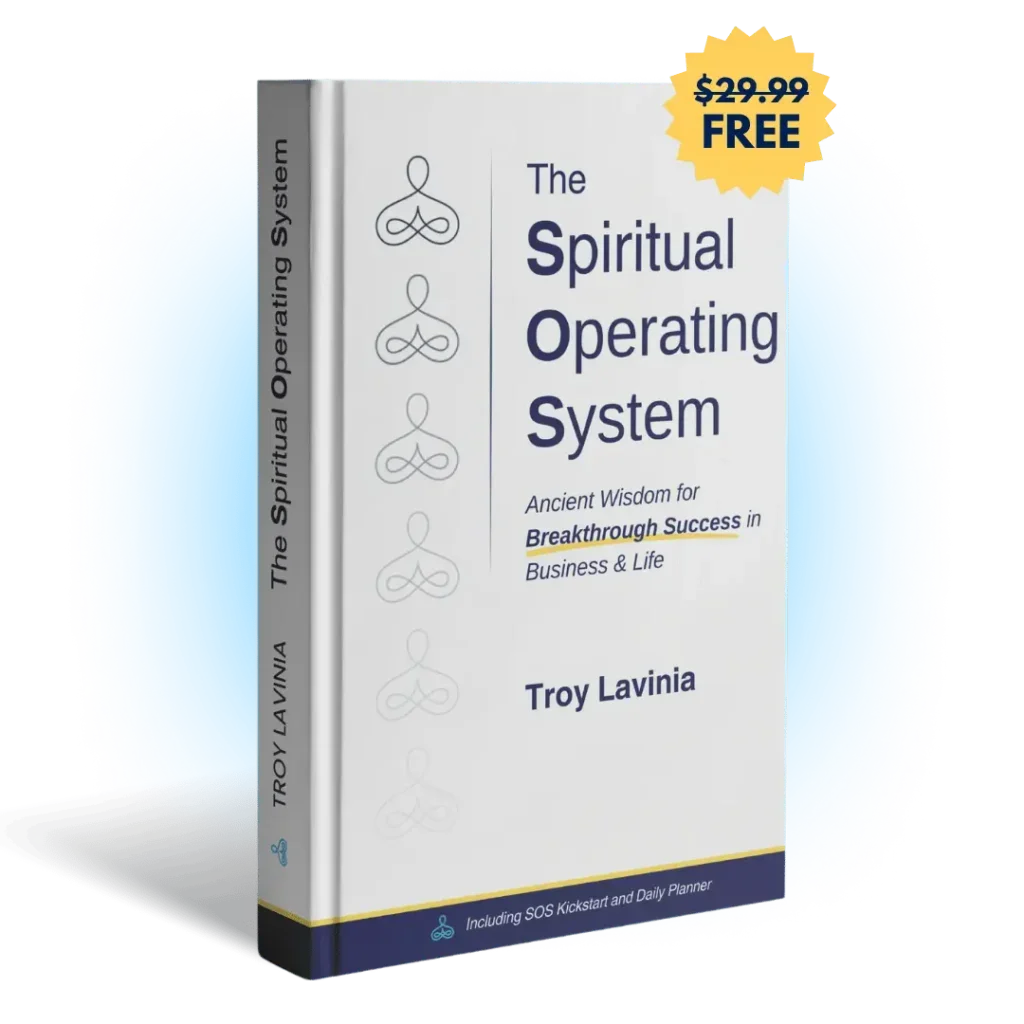
JOIN THE DAILYSOS COMMUNITY AT DAILYSOS.COM AND GET TROY’S BOOK FREE.
DOWNLOAD THE AUDIO FILE:
WATCH THE VIDEO:
DailySOS Founder and CEO Troy Lavinia explains how integrating visualization and spiritual practices into his daily life helped him find balance and happiness.
READ THE TRANSCRIPT:
INTRO
KATE KEMP:
Hello and welcome to episode two of Octo Tat Talks.
I'll be speaking with Troy Lavinia who is the founder and CEO of Daily SOS and also the author of The Spiritual Operating System.
We'll be talking about spirituality. We'll be talking about a book that he's got in progress called The Prophet, The Mystic and The Physicist which is about kind of about the intersection of spirituality and science. We'll talk a little bit about another one he has in the works, a detective novel called The Echo Below and we'll wrap things up by covering off on how you can kind of push through when you feel like everything's kind of pushing you down so … the value of community and ritual and visualization and kind of going with the flow. Hope you enjoy. Let’s go!
OCTO TAT TALKS EPISODE TWO WITH TROY LAVINIA
KATE:
I am joined today by founder and CEO of Daily SOS, Troy Lavinia. Um, so Daily SOS is a community really focused helping people achieve mental and spiritual fitness. Uh, kind of ending that struggle and grind. And I met you through actually a LinkedIn message. You sent me a LinkedIn message in September 2024.
Um, and it still it took me it took me a few months to to join the community, but I'm so glad I did. Um, when did you actually start Daily SOS?
TROY:
I started it in September of 2022 was first month that we ran the program.
KATE:
Okay. And then how many members would you say have been through your program at this point?
TROY:
Like 500. Plus or minus, I would guess. Yeah.
KATE:
You talk about on LinkedIn how this program is really focused on a “vision, flow, surrender” approach and how that's actually kind of an ancient approach that's been forgotten. Can you tell me a little bit more about that?
THE ORIGIN OF DAILYSOS (00:02:03)
TROY:
I'll take it a step back. The origin of all of this is looking for a way to create consistency and stability in my life personally um and success in my business. My primary business that I still have is a business called Mosaic Research Management and we do research for hedge funds and private equity firms. And I started that business in 2010. And for the first like five to seven years, it was successful, but I really struggled to um accomplish as much as I wanted to um to have as much of an impact as I wanted to and to be able to accumulate wealth and freedom and and success as I thought of it from an entrepreneurial standpoint. And the business was good, but you know, I was still struggling. And I had read I want to say hundreds of books, but, you know, tons of books on business and strategy and how to do business correctly, systems, operations, etc. I felt like there was really nothing else I could be doing from a strategic or tactical standpoint in business to be successful with it. And so I started to read more about visualization and like rewiring your subconscious mind and your identity. And also starting to incorporate more spiritual principles that were in alignment with my yoga practice and my meditation practice and trying to incorporate those into how I was doing business. And so I came up with a daily program for myself for managing my life and managing my business that incorporated what I thought were the most important spiritual principles and subconscious mind principles that I had read about in many different books and those are: vision, flow, and surrender.
And what I found is that when I created a daily plan for myself or a daily routine for myself that incorporated those principles into my life and into my business, it grew really well and really successfully. I started a subsidiary to that business and we grew from zero employees to 150 employees in 18 months and we were able to sell that business and create a really great success story for the employees and for myself with that one.
Life has been, you know, pretty enjoyable and pretty easy since I started putting these spiritual principles first. So, vision, flow, and surrender were kind of the ones that that stuck out. If you think about all of the spiritual traditions and a lot of the mystical traditions, these are things that most of them touch on.
THE VISION PRINCIPLE (00:04:58)
So vision is the idea that everything is grown in consciousness, you know, or in the subconscious mind um and is created as an idea and held in mind, held in consciousness, nurtured with love and gratitude and it exists there before it can exist in reality. And so really important to listen to your heart, listen to your higher power and claim what it is you want to be creating in life. Create a concrete vision for it. Start to visualize that and step into it and embody it in mind and then allow that to unfold. That's the first principle of vision.
THE FLOW PRINCIPLE (00:05:51)
The second is flow and that's the idea of staying aligned with love rather than fear. If we are operating from a place of joy and a place of love from an openhearted place throughout the day and we're making decisions that feel good to us. If we've done that visualization and we've started to become the person that we want to become in consciousness and in mind and in our subconscious, then when we're acting from a place of love, when we're thinking and deciding from a place of love, those actions and decisions are going to be naturally aligned with that new self that we're becoming. And the world will start to kind of ferment around that. Um and it will start to unfold that way.
THE SURRENDER PRINCIPLE (00:06:40)
And then surrender is letting go of the old programs and the old self. is that there are old subconscious programs or old aspects of your identity of who you are that are no longer in alignment with what you're becoming. Then you can look at those, love those, be with them, hand them over, surrender them to God, to your higher power, and then eventually let those go with enough of that love and awareness. And what's left over is the new self. And what you hold in mind tends to manifest, tends to be projected out onto physical reality through you if you stay true to it for long enough. And so that's what I found to be true. And the idea is taking those principles and turning them into a daily routine that allows you to incorporate them in your morning routine and then throughout the day so that you can stay consistent with them. So they are not just spiritual concepts or ideas but they're also kind of a way of living, and you're giving them an opportunity to work for you in your life. And then what I found is that when I do these things or when I've taught people to do these things either in my business or in this course, that's kind of the upstream work that is allowing everything to be much easier downstream. Whereas, if you're starting with business strategies and tactics or relationship strategies and tactics or fitness or wealth building or whatever it is, strategies and tactics in the physical, but you haven't first created that self in mind and in consciousness, fixed any of the things within you, or allowed yourself to let go of any of the things within you that are contrary to that, and you've allowed that to unfold through you, then you're going to be fighting an uphill battle with any of the changes that you're trying to make externally. And it wasn't until I started doing these things that I was able to have success in any meaningful way for myself and just lasting happiness. So that's that—those are the principles.
THE DAILY HUDDLES (8:59)
KATE:
It's interesting how you talk about routine and the importance of this, you know, ritual and practice. And so I consider you my spiritual fitness coach, really. I get a lot of value out of these daily huddles that you do where, you know, it's 20 to 30 minutes every morning. We get together, you give us a guided meditation on Zoom, and a lot of that will be new information, new guidance, and things, but there's also a lot of repetition with some of the things that you help ground us in. And that's one of the things I really love about these sessions. The answers are so simple, but sometimes we just need them pounded into our head every single day, and to share that energy and just remind ourselves that it's all right there.
It's interesting that there are so many fitness programs, but when it comes to spiritual fitness, you've talked on a couple of other podcasts about how really the only two places that you will find those things are typically in churches or in programs like Alcoholics Anonymous, where it's focused on spiritual growth, repetition, practice, and community.
FINDING SPIRITUALITY BEYOND CHURCHES (00:10:31)
KATE:
I'm curious—I know you've talked previously about how, when you were growing up, your mom kind of dragged you to church, and you didn't really connect with that version of God or that approach. So I’m curious, what was it that didn't work for you that made you go looking for other opportunities to connect with a higher power?
TROY:
For me, being brought to church growing up, it's like a really unilateral decision...and there was very little understanding of why we were doing it. The experience itself felt very esoteric and impractical. At least as a kid, I found church is pretty boring. They were talking about things that felt really cryptic, and you don’t see a whole lot of tangible benefit from it in life.
So, as soon as you're big enough and forceful enough to get yourself out of that necessity to go to church, at least I took the out. And as soon as my mom said, "Hey, fine, whatever. Don't go," I was like, "Great, done. I'm out."
I think a lot of people have the same experience. We're given this idea of religion or this idea of God by our parents, and that's what ultimately what worked for them, or what they inherited and chose to keep. Then they pass that on to us with the best of intentions. But if it doesn't resonate with us, we put it down.
So there was kind of a spiritual dormancy for me from about age 12 through age 23 or 24. I didn't think much about it. Then I came back to my spirituality. I started doing yoga around 2000, and that led to meditation. That led to this idea that there was a higher power and there being a connectedness.
Ultimately, when I would struggle in life, I realized I could call on forces that were larger than myself—God—to help. I'd hit rock bottom or go through struggles where no practical solutions were working, whether it was therapy, exercise, or whatever. So I came back to spirituality out of necessity.
What I found was that life started getting better through prayer, through desperation, through calling on God. Things would improve for a while, and then I'd forget to do it. I'd forget to stay consistent with my prayer, my spirituality, my meditation, or whatever my practice of connecting with God was. Um and life would be pretty good for a while and then yeah, I'd stumble and I'd kind of hit rock bottom, fall on my face again, and then I'd find God once I fell on my face. Things would get better, and you go through a few of those cycles … at least for me … after four or five of them over the course of a decade, I realized I needed to come to this stuff first. If I put my spirituality first every day and consciously took time to connect with my version of God—whatever that means to me, essentially staying open to receiving, enjoying, and sharing love—then life continued to stay pretty good. I stayed emotionally and spiritually fit in the sense that I was open to love, receiving it, feeling it, enjoying it, and sharing it on a consistent basis.
That's how I came to know God: as this force and source of life, love, and life energy that underlies and powers everything we see, and that grows everything we see. The version of God I was given as a kid was some figure in heaven with a white beard who felt kind of rigid, and that didn't appeal to me. So I set that version down for a while.
Part of the nice thing about growing up—if you choose to—is that we're given these big structures or pillars of life like God, religion, sex, marriage, work, and our parents inadvertently give us their version of each of those things, and we grow up with those preconceived notions as our default programs of what those things look like and then, if we're lucky, we have an opportunity to set down and reject those old versions if we like. And maybe there are some that our parents modeled really well—maybe they did marriage really well, and we like that and we keep it. But maybe some versions of those things that they gave us we don't necessarily agree with, and we let those go and then we can kind of create this really nice new life for ourself as an adult that’s really custom to us and what we believe in. And that works well with other people. It’s like a real blessing to be able to do that. And so, I was given one version of God, tried it, didn't really like it, and put it down for a while. Then I picked up another version of God back up, out of necessity, stuck with it, and got to know it for myself.
What I try to do in the Daily SOS is simply give people an opportunity—and a reminder—to connect with their version of God every day. What God looks and feels like for you is different from what it is for me, and if we have a hundred people here, it'll be a little different for every one. The most important thing, I feel, or what I’ve experiences, is to make that connection every day. Remember that you're one with that source of light, love, and life energy, that you can be open to receiving, enjoying, and sharing love, and that you have the opportunity to grow, experience, and enjoy the life you're envisioning for yourself.
Hopefully that answered your question.
CONNECTING TO THE GOD OF YOUR UNDERSTANDING (17:58)
KATE:
Absolutely. One of the things I appreciate about the way you present a higher power in your daily huddles is that it's really the God of your own understanding. It's an energy—however you choose to see that. It's just about acknowledging that it's not all you. You're part of it, and it comes through you. We can amplify it. We're little conduits for it. You have a phrase that I absolutely love...what’s the “filament in a light bulb?”
TROY:
Oh yeah. We're kind of the body—we're like the filament between heaven and earth.
KATE:
Yeah, so it’s like we ARE the light, and we can amplify that light. (And it's funny—there's lightning that just struck outside my window as I said that, which is hilarious to me.)
There's never lightning in the Seattle area.
TROY:
Get outta here! You’re in the flow…
KATE:
Yeah, [laughs] and I appreciate that and as I try to invite people into this community, I have a lot of atheist or agnostic friends, and I just try to explain to them that this isn't "white-bearded God" talk. This is energy and connectivity talk. This is ritual talk. It's about trying to connect to something bigger than yourself so you can visualize the positivity, visualize what's next, and how it absolutely, 100% works. It's interesting to me how simple it is, and when we look at the zeitgeist of everything we've learned, how powerful that can be.
The Prophet, the Mystic, and the Physicist (19:47)
KATE:
I know you've shared in a couple of huddles that you're working on another book, The Prophet, the Mystic, and the Physicist, which fascinates me because it's absolutely the kind of conversation I love to have. What can you tell me about that book and where you are in the scheme of things there?
TROY:
Oh man, I think I have to keep this part kind of brief just because I haven't been working on it. I started this about a year ago. And it’s just the idea is that if we study the commonalities between all these different traditions and teachings, we can start to understand … better understand some of the universal truths of how the universe works.
Right?
There’s Newtonian physics—everything that we can see and like how objects interact with other objects in a physical space—but we really don't have a tangible understanding of what happens beneath that or what's happening that’s causing that. And a lot of the spiritual traditions and mystical traditions have tried to understand that and decode it and then prescribe solutions to it. And quantum physics is trying to do the same thing in a more scientific way.
And so the idea behind the book is to look at the different major religious and spiritual traditions, and look at the different mystical traditions, and look at quantum physics and see what are the main principles in each of those like modalities. And what are the commonalities so like what does quantum physics say about holding something in mind and having it manifest? And then how do Christianity and Taoism and Buddhism talk about the same types of things? And we can start to see that different cultures use different languages in a way to describe the same things. So how can we then take that and figure out maybe how the universe, or forces that underly the physical universe—actually work.
And I have a draft, but I haven't worked on it in about nine months because I started two books. I was writing that and I was also writing a detective mystery novel.
KATE:
Oh, cool!
TROY:
Yeah, I got really into the detective novel, and so I’m working on that right now. I’ve been working on that. I’ve been working on that for the past nine months. And I need to make a little bit more progress and get that done, and then I'll come back to The Prophet, the Mystic, and the Physicist. I'm excited about it. It’s starting to come back to me.
Thanks for asking about that.
THE ORIGIN OF THE SPIRITUAL OPERATING SYSTEM (23:00)
KATE:
Absolutely. So how many books do you have now? Because you also wrote The Spiritual Operating System to supplement the program, which is fantastic, by the way.
TROY:
Thanks.
KATE:
And free for anyone who needs to take a look and see if they can dive in, right?
TROY:
Yeah. I wrote the book first. So I sold my company, and then I was like I really wanted to share how I did this because, this was remarkably easy. And obviously, there’s a lot of luck that takes place when you accomplish something, if you have some success … but I really believe that when I really first started implementing all of these principles very very consistently that I was able to have a lot of success really quickly. And so I wanted to share that, and so I wrote a book about it explaining the three primary spiritual principles that are pretty consistent across traditions. And I talked about the seven daily practices that I put in place that helped me leverage those and even some practices that I put in place in my business that helped us as a team leverage those spiritual principles.
So then I wrote the book and I did that just in twenty minutes after I meditated every morning just in twenty minutes for three months. Then I hired an editor to clean it up, and then published it—self-published it.
But then I realized I didn't know how to market a book. And so if I actually wanted to help people with this, there’s not gonna like … it’s gonna be challenging for me to figure out how to get people to read this book. Even if ten thousand people to buy it, only five percent of them are actually going to finish the book. And for a book like this, it’s all about how you implement the practices not just reading and and learning it. So if I sold 10,000 copies of this book, maybe a thousand people would actually read it, and there might be fifty to a hundred people who actually do anything with it and like implement it consistently so if I create a course or a program, I have a better chance of actually helping people implement these things. That's why I created the program, and then I decided just to give the book away as a PDF to people when they joined the program.
And I tried to make a business out of the program for a while because I think content businesses are super interesting. And we were creating a ton of content—a lesson and a meditation every day—and so there’s a hundred different ways you can slice and dice and turn that into mini programs and different things. Um, and a content business like that, you know, can charge a really small amount of money and create a tremendous amount of value for people. And that's much better business than selling a book. So, it all made sense. And for about two years, we were doing it as a business where people would purchase a subscription, they'd get the book, they'd get access to the daily huddle, they'd get access to the 21-day course and all the meditation library. But I just kind of got tired of trying to figure out how to market it successfully and never really cracked the code on that. And so now it's just a it's a WhatsApp group as you know and people can can join and dial into the to the meditations every day that we do on Zoom. So that's kind of where we're at with that.
THE POWER OF TWENTY MINUTES A DAY (27:00)
KATE:
When I initially joined the program I I would attend the huddles and you know like you said you the answers are right there. It's all in front of you. It's all easy to access but it's it's difficult to get over that hump of actually doing the thing. You know there's a 21-day reboot. It's very simple. It's all laid out. And it took me probably six or seven months before I actually was like “Okay I'm going to do this. I am going to do this. And I did in conjunction with taking your advice of, ‘hey, if you got to create a project that you're passionate about, just put 20 minutes a day into it.’ That's three snooze button hits, okay? Like don't …
TROY:
I know…!
KATE:
When you want to—
TROY:
It’s so hard, though!
KATE:
But why IS that? Like why …
TROY:
I don't know. I'm This is what I'm struggling. I don't know what it is. Well, let's think through it.
KATE:
Okay.
TROY:
I'm struggling with this right now because I'm doing most of the things like most of most of the habits, right? But I haven't been doing for the last month or so, I haven't been doing the 20 minutes a day on the things that I'm trying to create. And that's the idea like … if you just put and this really really works as crazy as it sounds. If if there's something that you're creating, whether it's a project at work or it's your own business or it's, you know, even a relationship that you want to improve, whatever it is, a book you want to write, etc. Anything that you're trying to create or grow, if you just like clear the decks and sit down for 20 minutes and you visualize like I'm writing this book. I sit down and I set a timer for 22 minutes and the first two minutes I just sit down and I think about the end point of that which is like, “Oh my goodness this is amazing. I’ve created this detective story. It's this series. People love it. I love making it. These characters are so real. You know Keanu Reeves is playing this lead character in the Netflix series.” It's like, “Wow what a this is so amazing. I'm loving it. like I'm loving bringing this theory to life.” And like even just thinking that for 5 seconds, I start to get excited about it. I haven't worked on the book in a few weeks because I've been procrastinating and like making excuses. But like I do that. I get excited. I'm like, "All right, let's go." And then I sit down and I work. I set a timer for 20 minutes. I work on it. And then once the 20 minutes is over, I stop.
And it's so easy to go past. Like once you do 20 minutes, most of the time you're going to be on a roll and you're going to want to keep going. And in a lot of sometimes it makes sense, but in most cases I'd say stop. Stop after 20 minutes because you're creating this momentum within yourself and around you and in the universe I believe right where you've like stepped into your garden essentially. there's this thing you're growing—this book in my case—I've shined a lot of love and attention on and it's human love and attention awareness that grows right and I've just and I've actually done some work related to it if I put it down then God and the universe will continue to grow that thing that thing's going to keep growing just like if I stepped into my garden over here and I did a little bit of digging a bit of, you know, playing with the soil, making sure that it had enough water, making sure it had enough light. I don't need to sit there for 24 hours and like pet the thing in order for it to grow, right? Like nature and God and the the natural blueprint takes care of that and the thing grows and I just need to step in for a little bit of time every day and I think it's the same thing with anything creative. And then when you come back to it the next day, you do another 20 minutes and you have even more momentum. And then you're doing 20 minutes. You know, God's doing it, you know, 23 hours and 30 minutes of work. And eventually it requires more than 20 minutes. But if you've gone for a few days or you're stuck on something, 20 minutes is like a really massive amount of time. I found like I wrote my first book in 20 minutes a day. I started my business the last one is 20 minutes a day and then ultimately you end up doing more than one 20-minute work block, but it's really magic.
A LOT GOING ON OR A LOT OF EXCUSES? (31:24)
TROY:
In my case the last month I've had a lot going on but like I've had a lot going on. It's just like if you ever catch yourself saying that it's just like uh how bad do you really want this thing? because how many people have you heard say that? Like I never want to say that. But yeah, like “I got a lot going on,” but there's no excuse. Like I could I need to sit down for 20 minutes a day and put it into this book. I want to finish the book. And for me, I kind of know what it is. I've written a 380-page detective story. I really like it, but I mean, and I'm on the fourth draft of revisions. It's like basically done, but I haven't shared it with anybody and I don't know how to market it. And so like for me, it's that fear that this thing that I've created that I love, I'll show it to people and they won't get it or they won't like it or I'll try to market it and that won't work. Right?
So, it's kind of this fear of failure maybe that I see that on the horizon as like a very near-term next step for something I need to do on this book. And so, I've just subconsciously like pulled back and started to find other things to like spend my time on every day. And my day is very full and I'm doing a lot of things, but I haven't worked on the book. And so yeah, I think having an accountability group in in cases like this is really helpful.
When I was writing my first book, I had mentor Gay Hendrix who just text him every morning and say like I did my 20 minutes. And like that's really really helpful because I tell you if you just sit down and whether it's 20 minutes or it's an hour whatever amount of time it is that you can do every day consistently you will make remarkable progress very quickly. And that thing is either going to grow and and reach its point of success or it's going to grow and turn out to be something you're actually not interested in. But like legitimately, you know, the window has passed and you're not interested anymore and you got what you needed out of it, but you didn't ignore it or procrastinate or quit too soon. Um, and so you're going to see that thing through to its resolution. And it's so important because I feel like if if God or your higher power or the universe or your creative self is putting something into your heart and into your mind and saying, "Hey, this is time to create this.” Like for you. It's your podcast. Let's say you wanting to create it. For me, it's this book that I'm working on. Let's say it's another business idea I have that I'm working on with somebody and I have to work on it today. Right?
It's been put into your heart, into your mind for a reason, and it might end up being that great thing that you expect it to be. And it might end up being something totally different just like that plant in your garden end up being, you know, one thing. It might end up being another. But I think it's our obligation as humans who are given that vision that we tend to it at least with a little bit of space time every day in order to see it through to its completion.
And when we do that, we're opening up this channel like when we connect with God and we open up our heart, we're opening up that channel of love. And that channel is the same channel that creativity flows through, I think. Right? And so when we do this 20 minutes of creative work on whatever our heart's telling us to work on, we're keeping that channel open for creativity. And that channel is also the same thing. Abundance flows through. So I find when I'm staying wide open for love, I'm staying wide open for that creativity. And I'm doing a little bit of the work. I'm keeping that channel open. I'm staying wide open for abundance in terms of being generous and you know feeling abundant.
Everything flows really really beautifully and really nicely really naturally. And if I start to stifle any of those things then the channel closes and we start to feel congested and closed down and depressed.
And so, yeah, when I'm taking time every day to connect with God, feel love, give love, live openheartedly, when I'm taking time every day to actually do a little bit of work on thing that God has been telling me to grow and I'm staying and generous. Um, life unfolds and flows through us really nicely. So, I gotta get my butt back to work on this book. I'm like feeling starting to feel a little congested the last few days and that's a hard thing.
KATE:
Yeah. Well, maybe we need to be each other's accountability buddies because I was also inspired by your 20 minutes a day. Um, I I started working on like a sci-fi love story and um and I got like—I've typically written short stories and like short form stuff and I wanted to push myself to write a full book and it was doing the 20 minutes a day plus um my aunt was wanting to write some stuff too and so we for for like six months like you like you recommend every time one of us would complete our 20 minutes we just text the other one and be like ‘I did it.” And that's it.
And then and then the other person would be like, "Oh my gosh, I haven't done it yet." And would go do it. So, it's just like having that that push, you know, not even with the expectations that that anything would be shared with the other person. It was just the act of doing it. And I think that in the same way that it's much easier, I guess, well, for me anyway, for many people, to to work out when you have a group, when you're going to a yoga class versus doing yoga at home on YouTube where nobody's watching you and nobody knows you're doing it, you know, like I I think there's something to that. And and I think that when I when I stopped having that accountability with her, then those excuses come out.
And I feel like also when we're on to something, when we're tapped in with the universe and it is using us as a conduit to put something out there, um I feel like there's other energies that are just like “We don't like that.” Like, “You should not be that close to that. So we're going to give you the impostor syndrome. We're going to give you excuses. You're going to get a little sick and not feel like it.”
Because when you're given that gift, you have to prove that, “No, no, I really want it!” Like, “I'm willing! I believe in myself and this thing enough that even though I'm super busy and this business meeting went like two hours longer and now I'm super irritated about whatever happened in there. Like are you still going to do it now? Because it's it is like we're we're just capturing the the lightning that's outside. We're capturing the lightning, you know, we're trying to to direct it and show that we can handle it and then but there's going to be challenges along the way and and that's where things always break down and then it's like “Oh, well, now it's been two weeks like do I even care?” Like, “Now I'm on to something else.” But it's just like … it's so … I I think it is that that accountability check-in. So maybe we'll we'll have to check in with each other and be like “Did you work on your mystery novel?” and “Did you work on your sci-fi book?”
THE MISTAKE OF STAYING SMALL TO STAY SAFE (39:14)
TROY:
I think we we should definitely do that. Yeah, that's what that's what happens like when we when we start making progress. There's still this old self that that's part of us, right? The smaller self that wants us to stay small in order to stay safe. I think it gives ultimately the program and um and so it starts to kind of create that natural resistance when we start to take actions towards growth and creation and it means well it's trying to keep us safe because you know historically if we stood out and we grew then we died like our biology wants to keep us in the path.
The problem with that is that when you're being given something that you're asked to grow and your heart wants to do it and you're not doing it, it really starts to deaden you, right? And so we have to continue to just take that action and also then give attention and love to that part of ourself that's afraid that doesn't want to do it, right? Not necessarily ignoring that or just shoving that down and working, but also just noticing it appreciating it for how well it's kept us safe. Um, yeah, but that's like what usually happens once we start making progress or taking action on something.
UPGRADING YOUR SPIRITUAL OPERATING SYSTEM (40:50)
KATE:
So SOS in in your program stands for spiritual operating system and you talk a lot about rewiring and reprogramming and you know like treating us like we're machines that can be that can get new operating systems and new software to run and we're in charge of that, right?
And so that old program that we're running, you know, life version 1.0 where we try something new and we die. Like we need to upgrade like we need to upgrade to the new version … to life 3.0 where you try something new and you fly.
Like you you succeed, you know? It's different, right?
Um but it's hard. It's hard when you're running that old system to like take out that old floppy disk and be like, “I don't need you anymore. Now we're in the cloud” or whatever. You know?
THE VALUE OF COMMUNITY WORK SESSIONS (41:53)
TROY:
It's so hard. That's why it's helpful to have community, you know.
KATE:
Yes, very.
TROY:
I have a group here right now at my house and when we get off this call we're going to work for two hours and then we're going to take a half hour or so and share what we not necessarily like share exactly what we worked on but just talk to each other about what we worked on.
That's going to be good because I can't hide that two hour you know like I I'm not going to procrastinate on that two hours of work if I know that I have to talk to people about it. And that would be kind of nice to have that type of work environment where we can do that. We could share what we're working on or at least have accountability for what we're working on in like a creative healthy way. And these are people who are working on totally different things. It's a few of my friends who are artists and other entrepreneurs.
KATE:
That's awesome.
TROY:
Yeah, cuz I really need a kick in the ass right now to be honest.
KATE:
I hear you. It's so easy to make excuses. It's so hard to do the thing.
TROY:
Totally. And sometimes it's like I start to, you know, like I feel like a little bit like I'm in my head or I'm like processing some trauma or whatever it is. But like at a certain point, it's like you got you got to look at like the big check boxes. It's like got to sleep well. I’ve got to move and work out every day. I’ve got to eat right. And I’ve got to do some creative work. And if I'm not doing those things and I don't feel well, it's not because there's some old trauma necessarily or whatever. It's because I'm not doing stuff that makes humans feel good. And like one of those is actually like doing creative work of some sort. So that's what's been going down.
KATE:
That's awesome. So, okay. So, next up, you have your um detective book that we're going to see Keanu Reeves starring in a Netflix series about. It's going to be awesome. What else do you have brewing on the horizon? What's your what's your your next game? Everything? I know you're working on like 17 things at once.
TROY:
Right now I'm working on Mosaic, which is my primary business, and like the guys who are running that are doing a really nice job, and it's kind of a nice turnaround for us this this year. Um, and I'm giving a little bit of attention to that. And then also working on DailySOS. Like right now, it's kind of in like from a growth standpoint, it's in a holding period, but we're just hosting those meditations. But, I really want to come back to that because I think there's a lot of ways to take these concepts and turn them into programs and and other things that are helpful for people and it's just a matter of me putting it down and like um having renewed interest in it and I'm starting to get more excited about that again. So, I'll probably start working on that in the next few months again.
And then um this book, it's called The Echo Below, the detective story. So, we're going to work on that. Gonna finish that and then The Prophet, The Mystic and The Physicist that book about spirituality and the underlying nature of reality.
THERAPY CONSOLIDATION THROUGH AI (45:10)
TROY:
I started working with a friend of mine on a new business that is really an AI platform to consolidate all of the different type of therapy and healing modalities that you're working on. Right?
So, if you're seeing a talk therapist and you're seeing a psychiatrist and you're going to breath work and you're doing psilocybin journeys and you're doing all these different things and you're doing them over time, can we find can we create a platform where you can pull and those sessions and transcripts to create kind of a consistent thread where you can set some goals for the healing that you're doing and actually see how everything is unfolding and there can be consistency around it so that it's not because right now everything is really disjointed like if I'm doing talk therapy and I'm doing somatic therapy and I'm doing um breath work or body work or any of these things all that there's really no records of any of it being kept in most cases if anything it might be a few notes on my therapist's notepad somewhere um but I don't have much control over it. And there there's now ways for us to do that in a much more intelligent fashion so that we can kind of make more tangible progress in our healing more quickly. I'm work I'm gonna work on that.
KATE:
If people want to jump on board with Daily SOS, what's the best way for them to hook in? Just go into your site?
TROY:
Yeah, go to DailySOS.com, check it out and you can sign up there and join the WhatsApp group and then join the daily huddles and then if they go on there they can also get access to all the content in Skool and that's all free now and they can just play around with it.
KATE:
Awesome. Well, good. Well, I have really enjoyed this conversation with you and um diving a little bit deeper into how this all started and what you're looking at doing next. And um looking forward to our next huddle. Always a pleasure.
TROY:
Yeah, same. And let's uh let's let's start that text thread together. We'll get the accountability going.
KATE:
Perfect. I love it.
TROY:
Thank you so much for having me.
KATE:
Oh, absolutely. Absolutely. Before we drop off I'll just say like, you know, so you've you've done a lot of these podcasts. What's a question that you wish I had asked? Is there anything you want to talk about that you didn't get to?
TROY:
I think one thing that's always fun to hear is like what somebody's most excited about in about in life right now and also maybe like what's the thing giving you the most challenge in life right now? You can kind of … if somebody's willing to answer those questions honestly that that can be kind of interesting to hear. It's I think it's always interesting to hear people's challenges, especially successful people. They don't talk about them very often, but you start to hear the challenges that people are having and you recognize that there's only four or five big ones, you know, only a handful of big ones that we all have and everyone has them. And that's kind of nice to hear, I think.
TROY SHARES HIS BIGGEST CURRENT CHALLENGE (48:53)
KATE:
What would you say is your biggest challenge right now besides putting your mystery novel to the side when you shouldn't be?
TROY:
Oh boy. Do you have another hour?
KATE:
I do! [laughs]
TROY:
Yeah. Well, I think the high level is like I've kind of recently discovered this like main old program within me that kind of is like the root of like a lot of the a lot of the issues that I have in life. and my life situation right now. I'm getting divorced and I'm starting to date and I'm also trying to do that and and like I'm making a lot of new friends and I'm doing things that are like putting myself out there and like opening myself up to people um more than I have in a long time. And so there's like a lot of sensitivity to that. And so I feel like I'm in this life situation where this old program has been brought to life for me and it's basically just really old probably from childhood or maybe from past you know inherited into childhood or whatever depending on what you believe but it's this idea that like if someone gets to know me like at my core I'm I'm unlovable for whatever reason like like I like who I am on the surface, but you know, if you get to know me, I'm I'm either boring or not not a good guy. I'm unlovable and therefore I'm going to be rejected and exiled and like excluded. Therefore, I'm going to live and die alone. And so like this is this program within me and letting people see letting people see me or exposing myself to people triggers that program. And I think historically I've repressed that. I haven't been aware of it necessarily and I've been able to live a pretty successful happy life. But now that's coming to the surface. It's like I've continued digging and now there's this big fossil there. It's like whoa, what is this thing? And so now it's a process of like living my life, trying to enjoy my life while also giving love and awareness to this when it comes up rather than just pretending it's not there or repressing it. Um, and it can be pretty painful because if I'm like exposing myself and showing showing who I am, the more people like a new girlfriend or a new partner or new friends. I want to be doing that.
It's allowing— like doing that is creating this level of love and depth and and connection in these friendships and partnerships that I've never had and and connection in these friendships and partnerships that I've never had before, which is great. But once I go to that depth, there's this old program there that's really painful that makes me feel unlovable and makes me afraid of being rejected and being excluded. Um, and so my choice is stay at the surface and limit the degree to which I can connect with people and have like I can have superficial relationships and friendships and once they hit a certain level I can revert to my old safety patterns who just like push people away so that this relationship doesn't get any closer or don't show up because I'm uncomfortable socially or whatever it is. Or I can choose to like continue going deeper, continuing to open to love and open to connection, but at that level of depth, there's this whole program which is like I'm unlovable and they're going to reject me, which feels really terrible. Um, so it's like figuring out how to give that the attention and love that it needs so that it can start to melt and transform and that I can then go to that level of depth of of love and connection with people without that necessarily overriding fear and and sadness.
So, that's kind of a deep answer, but that's what I've been working on. Like, and that's become really apparent to me the past like two months or so. And so, it's like a big part of all of these new friendships and relationships I'm forming. Um, that's a lot of work and it's a big challenge, but it's I think a good challenge. Um, and like I'm really loving the friendships and the relationships and really trying to love that part of me as much as I can.
KATE:
That's really beautiful. Well, I I appreciate that um that honesty and you sharing that with me and it is interesting to me how we or I I have had a tendency to avoid working on those deeper issues with the comfort of a familiar relationship, you know, where you you you you think everything's great. you think everything's awesome because there's there are rituals there and there is repetition. So there's there's expectation and there's there's the known even if the known isn't the best to know.
And then then when you separate out and you see everything clearly and you start analyzing well why did this happen or you know what what is this pattern that keeps occurring and you get to that core and you're like, “Oh no!” like “I want to hide from this again I don't I don't want to deal with it.”
TROY:
Totally. Yes!
KATE:
But I think that that's a very beautiful place when you're in that vulnerable spot and you can see clearly and you have that choice of you know well I can run away from this or I can figure out why is that that you feel unlovable? Like what is that core? Where does that come from? Why? You know? What are those I am statements that you're feeding yourself that's perpetuating that story? And how can you visualize something new? That's that's tricky, but but possible because you know you can do it.
TROY:
Yeah. And it's there in front of you, you know. So now it's like we kind of have that responsibility to to keep looking at it, so …
KATE:
Yeah.
TROY:
Yeah. And we'll we'll see. I think it like the way this resolves itself is just by keeping it in the light, continuing to give it love and and awareness. Um, and that tends to heal things um, with enough time. And just being aware of it when it comes up or when we're when we're starting to experience that discomfort so that we don't jump into it and start acting from it and reliving those old patterns and just kind of reinforce it and and dig it in.
So that's the biggest challenge for me right now in life. I think it like it's really fundamental. So I think if we find one of those whatever that thing is that that you're working on that feels challenging it like for me it feels challenging directly in relation like in relation to my partnerships and relationships right but it's much more fundamental and universal than that too because it totally if I start to heal this it also relates to my fear of continuing to work on the book, right? Because it's, you know, putting the book out there is a way of letting people see me and maybe see like being vulnerable to being unlovable in that context. And like maybe a lot of that fear and trepidation around finishing the book and putting it out there starts to disappear naturally as I as I heal it.
THE VALUE OF A 21-DAY REBOOT (57:41)
TROY:
And so that's kind of the cool work of the healing practice. And part of what we're doing with daily SOS with that 21-day program is that like you set a goal for yourself. And in trying to accomplish that goal, it brings to the surface this next old thing that needs to be healed. Right? So like maybe my goal was to like have a girlfriend that I like and have a good relationship and I start to bring this to the surface and then I'm able to surrender this and heal this over time. And that not only helps my ability to accomplish that goal of having a of having a good relationship, but it also then has this … it changes who I am. And so I'm no longer afraid of working on the book and I'm no longer afraid of doing other things. Right?
KATE:
Good. Well, I mean it goes back to your focusing on those five key areas where you're not you're not giving yourself too much to deal with in your garden that you're nurturing and growing. Um and and keeping that balance because when we are going through something traumatic, it's really easy to focus all of our energy on that one thing and then you neglect the other things that are important to you and then you just feel worse than you did when you were dealing with the crappy thing.
TROY:
Totally.
KATE:
And uh that's tricky too. But but yeah, I think I think in everything that you're you're sharing, it's coming back to the ritual, the balance, and the positive reinforcements, as difficult as those may be. Um and and I think I think it's awesome that you've got your buddies out there to help uh help foster that environment where you are accountable for doing those things. You're not cocooning in a negative way. You know, you're you're cocooning with some other people to emerge—
TROY:
Community is really healing for sure.
KATE:
Absolutely. Absolutely. Well, I'm certainly happy to be part of your community and I hope that um this little conversation will encourage some other people to join and we'll see some new faces in the huddle. Um because I think the more the merrier and that that the more people who are sharing that positive energy and proving that by connecting with community and kind of live in and a little bit more fun.
TROY:
Thank you. Uh, thanks for having me. This is a really fun and helpful conversation for me, too. So, I appreciate it. Hopefully, other people will find it helpful.
KATE:
Awesome. All right, Troy. Well, I'll see you soon.
TROY:
All right. Bye, Kate. Great to see you.
KATE:
You, too.
NEXT TIME I’ll:
Figure out a way to equalize the audio
Stop saying everything is interesting (!!!)
Keep working to eliminate all the annoying filler words I said I’d stop using after the first episode but clearly did NOT